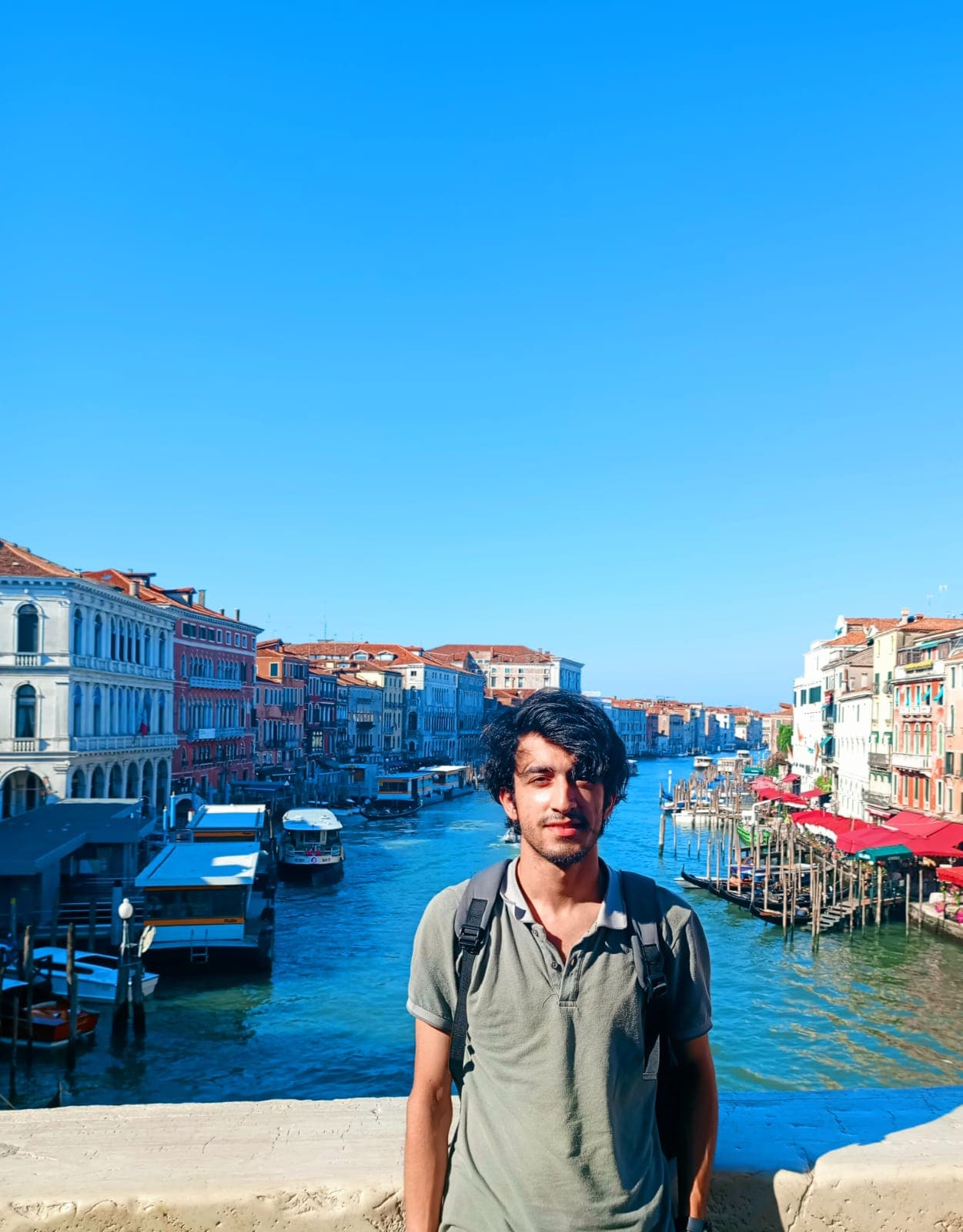
Oruç Çakır
Computer Engineering Student
I'm driven by a simple idea: turning complex challenges into clear, efficient solutions. Whether it's optimizing a processor at the hardware level or building an intuitive AI, I thrive on uncovering hidden patterns and creating clarity from chaos. My journey through international internships has taught me that the best technology is built by people from diverse backgrounds, and I carry that collaborative spirit into everything I do.
Education
Bachelor of Science: Computer Engineering
GPA: 3.83/4.00
High School Diploma
Graduation Grade: 98.9/100
Work Experience
Software Engineer
- 🇹🇷🇹🇷🇹🇷🇹🇷🇹🇷🇹🇷🇹🇷🇹🇷🇹🇷🇹🇷🇹🇷🇹🇷🇹🇷🇹🇷🇹🇷🇹🇷🇹🇷🇹🇷🇹🇷🇹🇷🇹🇷🇹🇷🇹🇷🇹🇷🇹🇷🇹🇷🇹🇷🇹🇷🇹🇷🇹🇷🇹🇷🇹🇷
AI Performance Intern
- Developed Lumina, a modular full-stack profiling framework for LLMs (VLMEvalKit, llama.cpp, perf, PAPI, nsys, ncu).
- Profiled inference on Intel Xeon 8480+ and NVIDIA H100; identified bottlenecks across CPU/GPU.
- Benchmarked on MMLU, MMBench, OCRBench.
- First-author paper accepted at SAMOS 2025: “Beyond the Shadows A Deep Dive into Profiling Modern Mixed-Modal and Multi-Modal Transformer Models”.
- Undertaken as part of the Erasmus+ program.
IoT & AI Intern
- Integrated OPACA Framework with Node-RED via custom nodes for agent communication and automation.
- Built a ChatGPT-powered smart home chatbot with voice & image capabilities; modular backend integrated with OPACA for real-time use.
- Undertaken as part of the Erasmus+ program.
Software Engineering Intern
- Contributed to the Roketsan MUFS (Micro Satellite Launch System) demo project using Java Spring and React.
- Integrated database support using PostgreSQL for reliable data persistence and system monitoring.
- Learned and applied Grafana for dashboard creation and Kafka for event-driven communication within the system.
Undergraduate Researcher
- Led design of a custom pipelined processor in Verilog; drove architectural & functional optimization.
- Coordinated on-site and remote progress during internships; resolved design challenges.
- Researched transformer optimization for LLMs; developed transformers.cpp (C++).
Full Stack Developer
- Developed the Specson CO₂ Capture System (C#/.NET): modular components, UI, MFC backend logic.
- Integrated Excel-based data handling & reporting; improved operator workflow.
- Diagnosed and fixed a legacy timing issue affecting run scheduling in earlier versions.
Teaching Assistant
- Supported labs, clarified core programming concepts, and guided OOP exercises.
Private Tutor
- Provided private tutoring to a fellow student, covering introductory programming with Java, algorithms, data structures and combinatorics.
Achievements & Awards
TEKNOFEST 2024 Digital Processor Design Category
TÜBİTAK | The Scientific and Technological Research Council of Türkiye
05/09/2024
Kasırga ATEŞ Team 2nd place nationally, recognized for advanced processor architecture design and optimization.
TEKNOFEST 2024 Best Team Spirit Award
TÜBİTAK | The Scientific and Technological Research Council of Türkiye
05/09/2024
Awarded for exceptional teamwork, collaboration, and resilience throughout the competition.
Publications
Beyond the Shadows: A Deep Dive into Profiling Modern Mixed-Modal and Multi-Modal Transformer Models
Presented experimental configurations, reproducibility notes, and detailed profiling and benchmarking traces analyzing cache behavior, attention efficiency, and memory bandwidth across heterogeneous hardware for transformer based large language models.
Skills & Interests
Programming Languages
Frontend
Backend
Database
Machine & Deep Learning
Languages
Interests
Career Goals
Current Focus
I build efficient AI systems focusing on transformer internals, performance profiling, and hardware software co-design. My recent work spans Evangeline, transformers.cpp and Lumina,with first author results accepted at SAMOS 2025.
Short Term
Short term, I’m deepening systems level AI expertise: pushing inference efficiency, hardening open-source tooling and collaborating on reproducible, publication-quality experiments.
Long Term
Longer term, I aim to lead research at the intersection of AI systems and software to keep contributing high-impact, well-documented work.